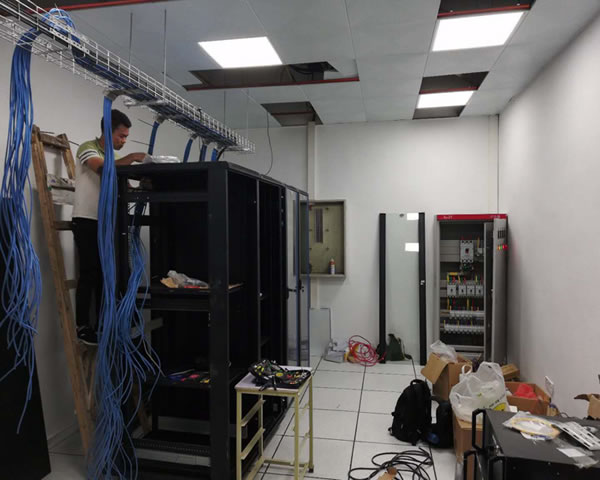
In today's digital age, websites have become an important platform for enterprises and individuals to show themselves. Choosing the right server, especially the US server, can provide guarantees for the performance and security of the website. Understanding the relevant server code is the key to quickly building a website. This article will provide you with a comprehensive list of American server codes to help you build your website efficiently.
Advantages of US servers
American servers are widely used for their stability and high performance. First, the United States has developed data center facilities that provide high-speed network connections and quality services. In addition, many US server providers provide 24/7 technical support to ensure that users can get timely help when encountering problems. US servers also support a variety of operating systems and programming languages, which provides greater flexibility for website development.
Common server code and its functions
When building a website, it is very necessary to understand some common server code. Here are some basic server code and its functions:
- HTML : Hypertext markup language, used to build the basic structure of a web page.
- CSS : Cascading style sheets for style design and layout of web pages.
- JavaScript : used to implement dynamic effects and interactive functions of web pages.
- PHP : A server-side scripting language, commonly used for the development of dynamic web pages.
- MySQL : A popular database management system, often used with PHP.
How to choose the right US server
Choosing the right American server is an important step in building a website. First, you need to determine the type and needs of the website. If it is a personal blog, it may not require too high configuration. ; For large e-commerce websites, high-performance server support is required. Furthermore, it is wise to choose a server that provides SSL certificates and DDoS protection, given the security. Finally, understanding the technical support and terms of service of the server provider is also key.
Basic steps to build a website
Building a website can be divided into several basic steps. First, you need to select a domain name and register with the domain name registrar. Next, select the right US server and make a purchase. After that, you can upload the website files to the server through the FTP tool, configure the database, and make relevant code settings. Finally, test the various functions of the website to ensure that everything is normal and then go online.
FAQ
In the process of building a website, users often encounter some problems. Here are some common problems and solutions:
- The website cannot be opened: Check whether the domain name has been resolved to the server, or whether the server is running normally.
- Slow page loading speed: optimize pictures and code and choose a server with higher bandwidth.
- Security issues: Make sure that the SSL certificate is installed and the website programs and plug-ins are updated regularly.
Optimize the SEO strategy for websites
To improve your website's ranking in search engines, you need to implement an effective SEO strategy. First, ensure that the content of the website is of high quality and provide the information users need. Secondly, optimize the loading speed of the website to ensure that it can also be displayed well on mobile devices. In addition, using appropriate keywords and reasonably embedding these keywords in various parts of the website (such as titles, descriptions, picture ALT tags, etc.) can further improve the friendliness of search engines.
Summary and suggestions
Building an efficient and stable website requires choosing the right American server and mastering certain server code knowledge. Through the complete list of American server codes provided in this article, you can quickly get started and build a website that meets your needs. At the same time, it is recommended that you regularly maintain and optimize the website to ensure the long-term and healthy operation of the website. If you encounter any problems during the construction process, you might as well seek professional technical support to ensure everything goes well.
- Latest articles
- A Practical Guide To Listing And Deploying Taiwan Cloud Server On Amazon
- Research On The Access Speed And Conversion Rate Of E-commerce Websites After Using Japanese Line CN2 Transfer
- Technical White Paper South Korea’s Large Bandwidth Server Rental Architecture And Bandwidth Control Strategy
- A Must-read For Beginners: Practical Methods For Optimizing Performance After Downloading And Installing Vietnam Zombie Servers
- Shanghai Japan Cloud Server Network Latency Test And Optimization Implementation Plan
- Korean Group Website Advertising Strategy, Local Platform Selection And Conversion Rate Improvement
- Network Interconnection And Routing Practice Of Hong Kong Cloud Server Cn2 In Multi-cloud Architecture
- From Logs To Traceability, Tracking And Analysis Methods After Tencent Cloud Hong Kong Server Was Attacked
- Stable And Cheap Malaysian Server For Live Video Broadcast. Key Points Of Delay And Jitter Control
- Sharing The Steps, Risks And Implementation Experience Of Enterprises Migrating To Cambodian Servers Alibaba Cloud
- Popular tags
-

How To Find Server Hosting In The United States And Take Into Account Data Sovereignty And Legal Compliance Requirements
when looking for server hosting in the united states, how to balance data sovereignty and legal compliance requirements? from data classification, hosting locations, service provider contracts to technical controls and cross-border risk mitigation, we provide systematic operational points and suggestions. -
How To Evaluate The Real Defense Logs And Traceability Capabilities Of Us High-defense Servers After A Website Is Attacked
after the website is attacked, how to evaluate the real defense log and traceability capabilities of the us high-defense server: log acquisition, integrity verification, correlation analysis, network and application layer evidence, compliance and forensic recommendations. -

How To Choose A Suitable US CN2 Server And Its Annual Cost Analysis
Learn how to choose the right CN2 server in the United States and analyze its annual costs to provide the best solution for your business.